Agroforestry is now among the top efficient and sustainable farming methods within Tamil Nadu. In the face of increasing challenges, like shortage of water, increasing cost of inputs and unpredictability in conditions for weather farmers are seeking alternative methods of farming that will offer a steady income as well as long-term advantages.
Agroforestry is the process of planting trees in conjunction with livestock or crops on the same farm. This system integrates farming practices to help farmers increase their earnings, improve soil fertility, and lessen the risks of traditional farming practices.
Tamil Nadu, with its varied climate zones that range from the coastal region to dry inland regions which is ideal for a variety of agroforestry models. In the entire state, farmers are choosing to adopt techniques of tree-based agriculture using species such as Casuarina, Eucalyptus, Teak as well as Melia dubia.
This article focuses on the most effective agroforestry strategies to Tamil Nadu farmers, as well as their advantages as well as crop combinations and profits potential.
What is Agroforestry?
Agroforestry is a type of land use that allows trees to be cultivated in conjunction with livestock and crops. Agroforestry, unlike traditional farming practices, focuses on combining both agriculture and forest management to improve effectiveness and sustain.
Three primary elements of agroforestry.
- trees (timber or fruits) (fuelwood)
- The Crops (food or commercial)
- Livestock (optional in certain models)
This system lets farmers earn money by using different sources of income instead of relying only on a single crop.
Importance of Agroforestry in Tamil Nadu
Agroforestry plays a significant part in improving the agriculture system in Tamil Nadu.
The advantages are:
- Enhances soil fertility and enhances organic matter
- Reduces soil erosion
- Enhances the retention of water
- Extra income generated by trees
- Reduces the risk of failure in the crop
In areas susceptible to drought like Tamil Nadu, agroforestry helps farmers get a steady source of income if the harvests of the season do not succeed.
Factors to Consider Before Choosing an Agroforestry Model
Before choosing the agroforestry method, farmers must be aware of a myriad of critical elements.
Climate
Tamil Nadu has different climate zones, including:
- The coast regions
- Dry areas
- Zones of irrigation
Every zone comes with its own trees and crops.
Soil Type
The conditions in the soil determine which tree species will thrive.
Water Availability
Specific species will require greater watering in comparison to other species. Farmers should pick their trees based on the availability for irrigation.
Market Demand
Selecting a species of tree with a large demand in the market will lead to higher earnings.
Best Agroforestry Models for Tamil Nadu Farmers
Below are some of the most effective and profitable agroforestry models.
1. Casuarina-Based Agroforestry Model
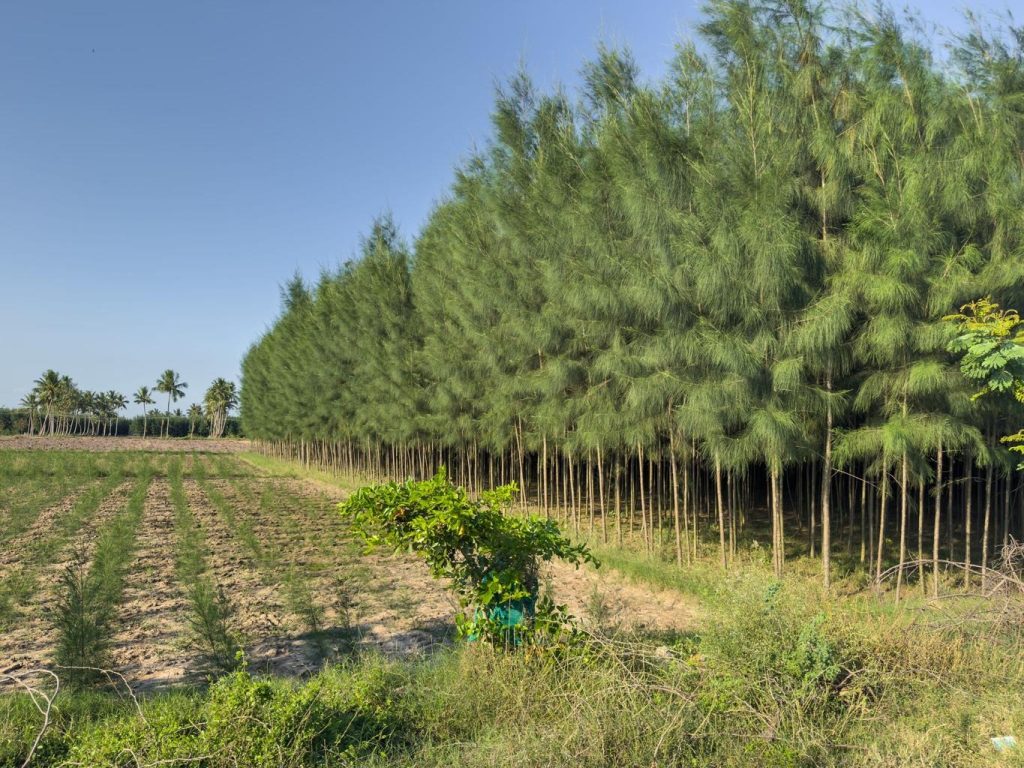
Casuarina (Savukku) is one of the most popular agroforestry trees in Tamil Nadu.
Suitable Areas:
- Coastal regions
- Sandy soils
Crop Combination:
- Groundnut
- Pulses
- Vegetables (initial stages)
Benefits:
- Fast-growing (3–4 years)
- High demand in paper industries
- Suitable for dry areas
Profit Potential:
Farmers can earn good income from timber while growing intercrops during the early stages.
2. Eucalyptus-Based Agroforestry Model
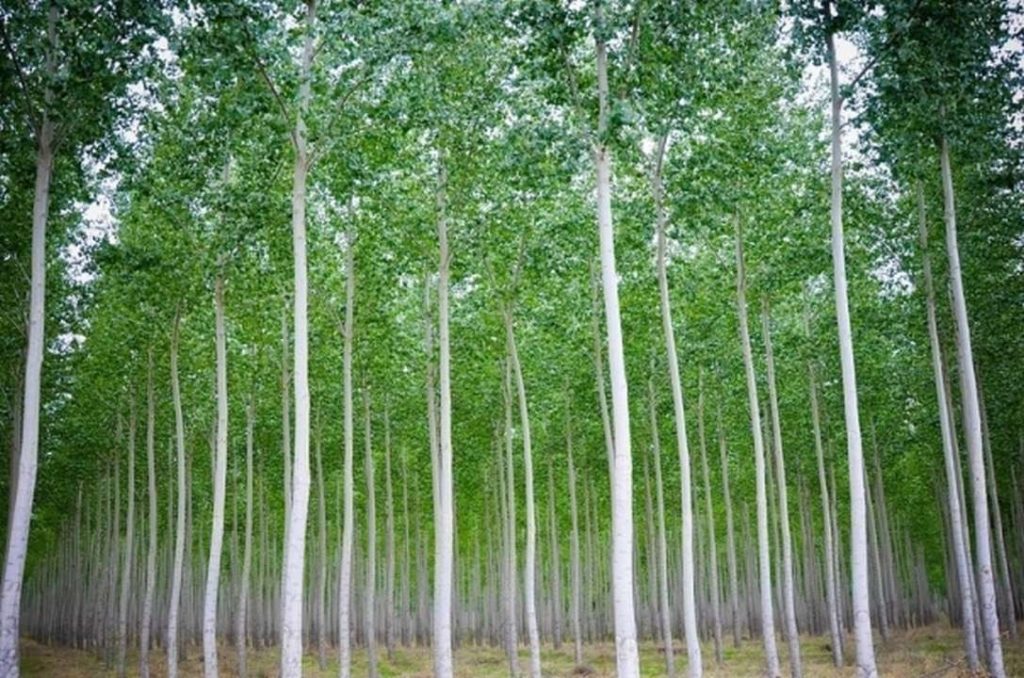
Eucalyptus is widely cultivated for pulpwood and biomass.
Suitable Areas:
- Dry and semi-arid regions
- Well-drained soils
Crop Combination:
- Millets
- Pulses
- Fodder crops
Benefits:
- Fast growth (4–5 years)
- High industrial demand
- Low maintenance
Profit Potential:
High returns due to strong market demand from paper mills.
3. Teak-Based Agroforestry Model
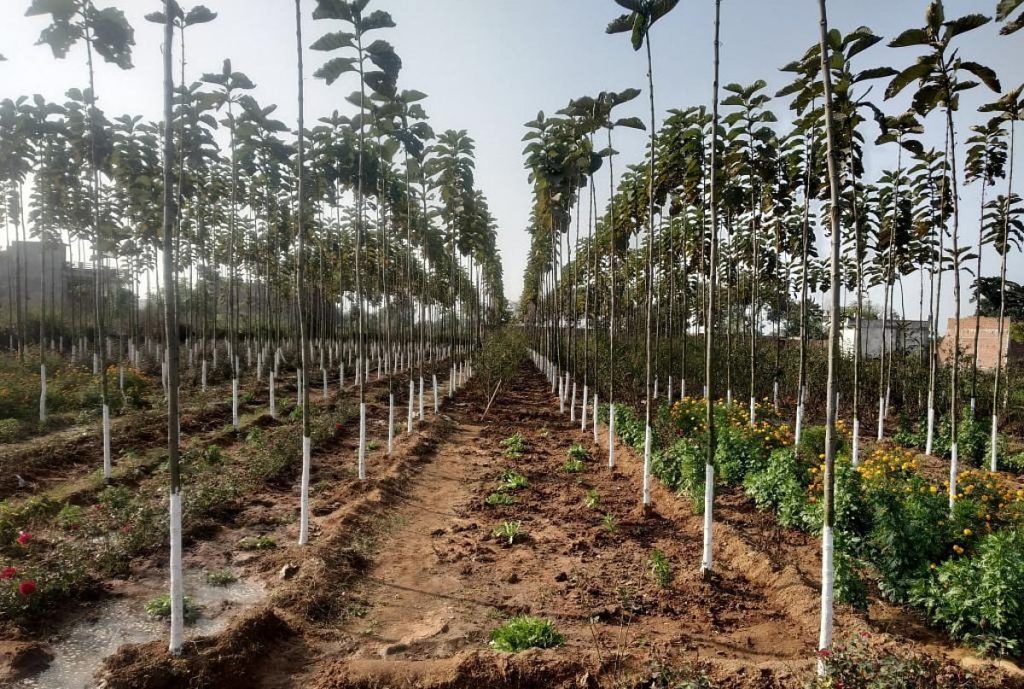
Teak is a premium timber crop with high long-term value.
Suitable Areas:
- Irrigated regions
- Fertile soils
Crop Combination:
- Banana
- Vegetables
- Pulses
Benefits:
- High-value timber
- Long-term investment
- Strong market demand
Profit Potential:
Very high profits, but requires patience (10–15 years).
4. Melia Dubia (Malabar Neem) Agroforestry Model
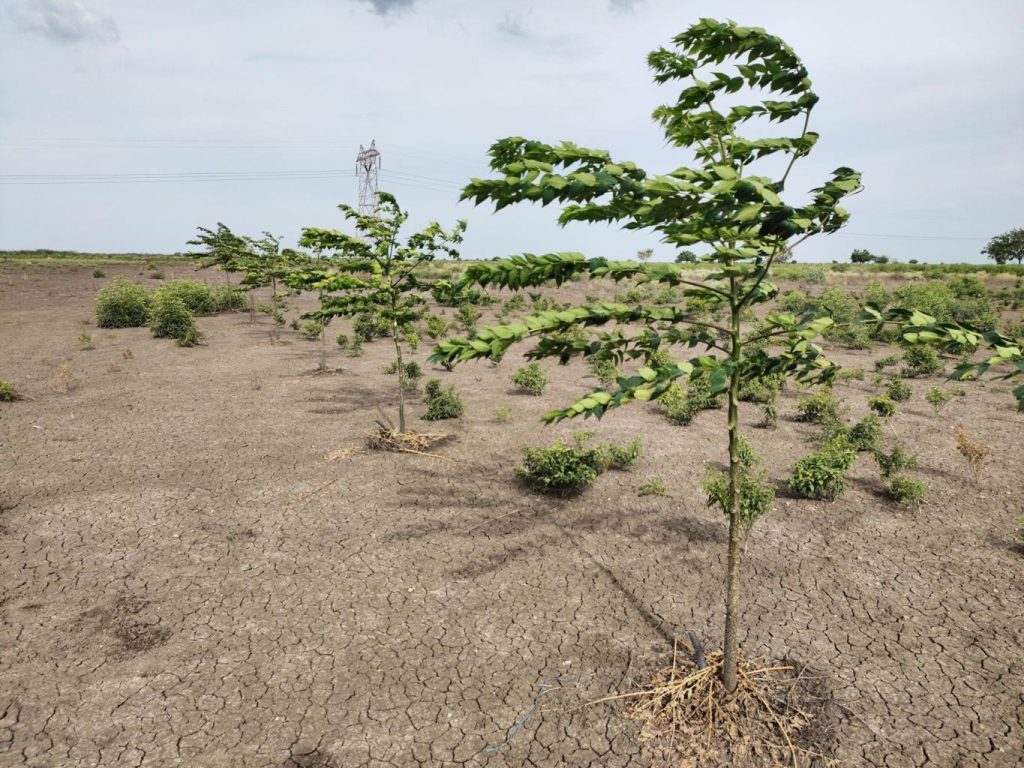
Melia dubia is gaining popularity due to its fast growth.
Suitable Areas:
- Well-drained soils
- Irrigated lands
Crop Combination:
- Maize
- Vegetables
- Pulses
Benefits:
- Fast growth (5–6 years)
- Used in plywood industry
- High demand
5. Coconut-Based Agroforestry Model
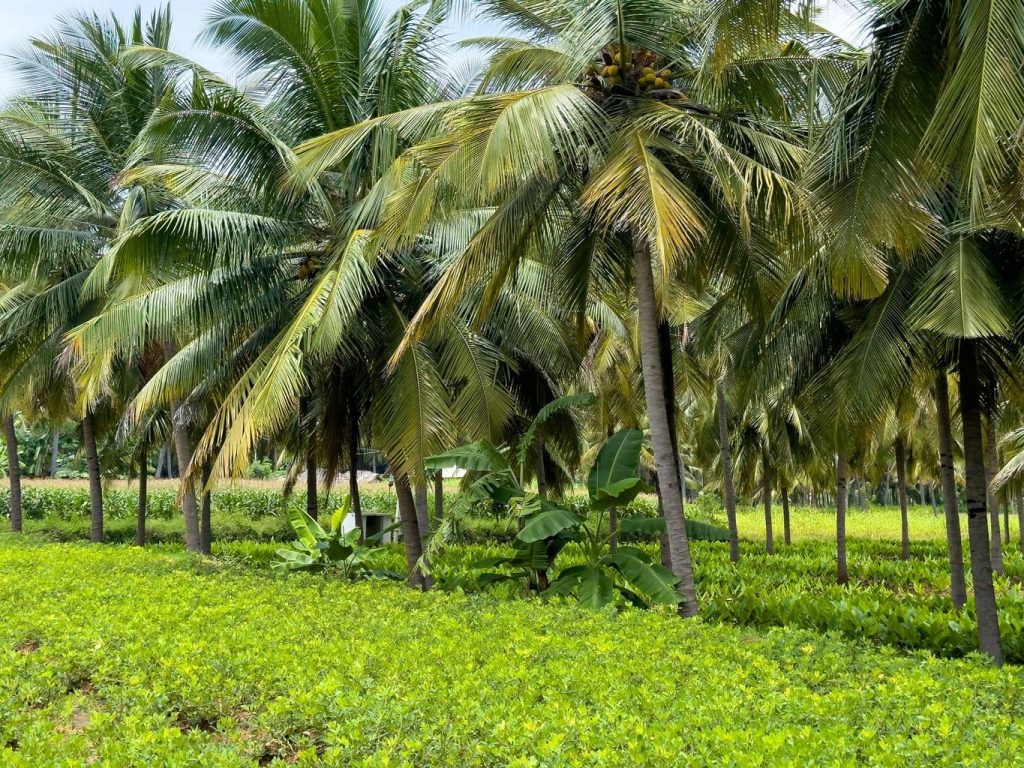
Coconut plantations are ideal for agroforestry systems.
Crop Combination:
- Banana
- Turmeric
- Pineapple
- Vegetables
Benefits:
- Multiple income sources
- Efficient land use
- Year-round income
6. Mango-Based Agroforestry Model
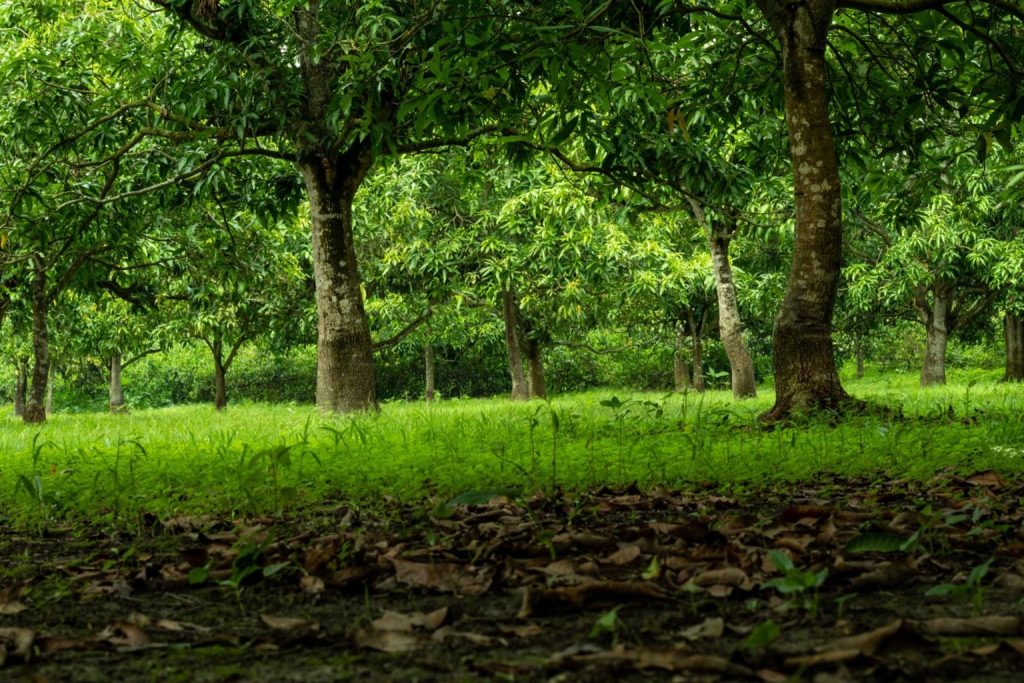
Mango orchards can be combined with seasonal crops.
Crop Combination:
- Vegetables
- Pulses
- Groundnut
Benefits:
- Fruit income + crop income
- Long-term sustainability
7. Silvopastoral System (Trees + Livestock)
This model combines trees with livestock farming.
Components:
- Trees (fodder trees)
- Grass
- Livestock (goats, cows)
Benefits:
- Dual income
- Efficient land use
- Reduced feed costs
Comparison of Agroforestry Models
| Model | Rotation Period | Profit Level |
| Casuarina | 3–4 years | Medium to High |
| Eucalyptus | 4–5 years | High |
| Teak | 10–15 years | Very High |
| Melia Dubia | 5–6 years | High |
| Coconut | Continuous | Stable |
| Mango | Seasonal | Medium |
| Silvopastoral | Continuous | Medium |
How to Choose the Right Agroforestry Model
Farmers should choose models based on:
- Water availability
- Soil type
- Investment capacity
- Market demand
For example:
- Dry land → Casuarina, Eucalyptus
- Irrigated land → Coconut, Melia dubia
- Long-term investment → Teak
Tips for Successful Agroforestry in Tamil Nadu
- Choose the right tree species
- Use quality saplings
- Maintain proper spacing
- Plan irrigation effectively
- Monitor pests and diseases
- Understand market demand
Common Mistakes to Avoid
- Choosing unsuitable tree species
- Ignoring spacing requirements
- Poor maintenance
- Lack of market planning
Avoiding these mistakes improves success rates.
Government Support for Agroforestry
Tamil Nadu farmers can benefit from various government schemes that promote agroforestry.
These include:
- Subsidies for tree planting
- Technical guidance
- Financial assistance
Farmers should explore local agricultural offices for details.
Agroforestry is a powerful farming system that offers both economic and environmental benefits. For Tamil Nadu farmers, adopting the right agroforestry model can lead to sustainable income, improved soil health, and reduced farming risks.
Whether it is fast-growing trees like Casuarina and Eucalyptus or long-term investments like Teak, farmers have multiple options to choose from based on their resources and goals.
By selecting suitable agroforestry models and following proper management practices, farmers can significantly increase their income and ensure long-term agricultural sustainability.
Frequently Asked Questions (FAQs)
1. What is agroforestry and how does it benefit farmers in Tamil Nadu?
Agroforestry is a farming system where trees are grown along with crops or livestock. It helps farmers in Tamil Nadu by improving soil fertility, increasing income sources, and reducing farming risks.
2. Which agroforestry model is best for dry land in Tamil Nadu?
For dry land areas, Casuarina and Eucalyptus-based agroforestry models are highly suitable due to their drought tolerance and low water requirements.
3. Which tree gives the highest profit in agroforestry?
Trees like Teak, Melia Dubia, and Eucalyptus offer high profit potential depending on market demand and rotation period.
4. How long does it take to get returns from agroforestry?
The return period depends on the tree species:
- Casuarina: 3–4 years
- Eucalyptus: 4–5 years
- Melia Dubia: 5–6 years
- Teak: 10–15 years
5. Can crops be grown along with trees in agroforestry?
Yes, crops such as groundnut, pulses, vegetables, banana, and turmeric can be grown between trees, especially during the early growth stages.
6. What are the best crops to intercrop with trees in Tamil Nadu?
Common intercrops include:
- Groundnut
- Pulses
- Millets
- Vegetables
- Banana (in irrigated areas)
7. Is agroforestry profitable for small farmers?
Yes, agroforestry is highly beneficial for small farmers as it provides multiple income sources and reduces dependence on a single crop.
8. What factors should be considered before choosing an agroforestry model?
Farmers should consider:
- Soil type
- Climate
- Water availability
- Market demand
- Investment capacity
9. Which agroforestry model gives regular income?
Models like coconut-based and mango-based agroforestry provide regular income through fruits and intercrops.
10. What is the role of spacing in agroforestry?
Proper spacing ensures:
- Better tree growth
- Higher crop yield
- Reduced competition for nutrients
11. Can agroforestry improve soil fertility?
Yes, agroforestry improves soil health by:
- Adding organic matter
- Reducing erosion
- Enhancing nutrient cycling
12. Are there government schemes for agroforestry in Tamil Nadu?
Yes, the government provides:
- Subsidies for tree planting
- Technical support
- Training programs
Farmers can contact local agricultural offices for details.
13. What are the common mistakes in agroforestry?
Common mistakes include:
- Choosing wrong tree species
- Poor spacing
- Lack of maintenance
- Ignoring market demand
14. Is irrigation necessary for agroforestry systems?
Irrigation is important during the initial growth stage, especially for trees and intercrops. After establishment, some trees require less water.
15. Which agroforestry model is best for long-term investment?
Teak-based agroforestry is ideal for long-term investment due to its high timber value.
16. Can agroforestry be practiced in small land areas?
Yes, agroforestry can be implemented even in 1 acre or less, depending on the model and spacing.
17. How does agroforestry help in climate change?
Agroforestry helps by:
- Reducing carbon emissions
- Improving biodiversity
- Enhancing soil and water conservation
18. What is the best spacing for agroforestry trees?
Spacing depends on the tree type, but commonly ranges from:
- 1.5 m × 1.5 m (Casuarina)
- 3 m × 3 m or more (larger trees like Teak)
19. Can livestock be included in agroforestry?
Yes, in silvopastoral systems, farmers can raise livestock like goats and cows along with trees.
20. How can farmers maximize profit from agroforestry?
Farmers can increase profit by:
- Choosing high-demand tree species
- Using quality saplings
- Managing crops efficiently
- Selling at the right market time